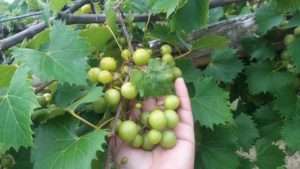
Grape Pest Survey - 2nd Week of July
The grapes at our monitoring sites continue to grow and are getting close to full size. This week, we caught …





El inglés es el idioma de control de esta página. En la medida en que haya algún conflicto entre la traducción al inglés y la traducción, el inglés prevalece.
Al hacer clic en el enlace de traducción se activa un servicio de traducción gratuito para convertir la página al español. Al igual que con cualquier traducción por Internet, la conversión no es sensible al contexto y puede que no traduzca el texto en su significado original. NC State Extension no garantiza la exactitud del texto traducido. Por favor, tenga en cuenta que algunas aplicaciones y/o servicios pueden no funcionar como se espera cuando se traducen.
Inglês é o idioma de controle desta página. Na medida que haja algum conflito entre o texto original em Inglês e a tradução, o Inglês prevalece.
Ao clicar no link de tradução, um serviço gratuito de tradução será ativado para converter a página para o Português. Como em qualquer tradução pela internet, a conversão não é sensivel ao contexto e pode não ocorrer a tradução para o significado orginal. O serviço de Extensão da Carolina do Norte (NC State Extension) não garante a exatidão do texto traduzido. Por favor, observe que algumas funções ou serviços podem não funcionar como esperado após a tradução.
English is the controlling language of this page. To the extent there is any conflict between the English text and the translation, English controls.
Clicking on the translation link activates a free translation service to convert the page to Spanish. As with any Internet translation, the conversion is not context-sensitive and may not translate the text to its original meaning. NC State Extension does not guarantee the accuracy of the translated text. Please note that some applications and/or services may not function as expected when translated.
Collapse ▲The grapes at our monitoring sites continue to grow and are getting close to full size. This week, we caught …
The 2019 crop is probably the most variable crop statewide that we’ve seen in quite some time. Many areas …

As we have seen in previous years from monitoring corn, Bt resistance is on the rise. They also are …

Presence of pests in our scouted vineyards remain very similar than last week. As in the past report, grape berry …
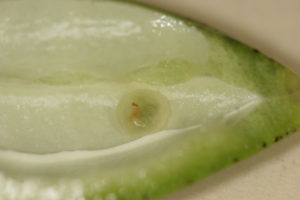
Folks have been noting a fair bit of stink bugs in cotton and earlier than normal this year. Below …
On Monday, the N.C. Department of Agriculture & Consumer Services posted a press release about the deaths of five …
The data from our 2018-19 NC OVT Small Grains trials are now available. You can find this data under …
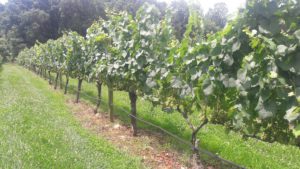
As the grapes grow, we again started to catch grape berry moth in one of our Northwest locations (Wilkes Co.), …

When cotton blooms, it’s time to switch sampling and thresholds for plant bugs. This previous article covered why you …
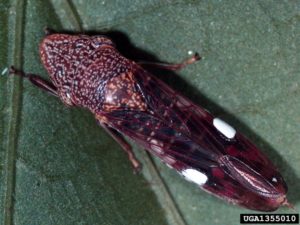
Glassy-winged sharpshooter (GWSS) detections continue in both of our Northeast sites, in Perquimans and Currituck Co., and we captured our …
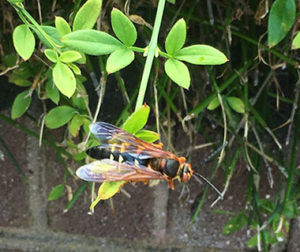
Cicada killer wasps are starting to emerge. This picture was taken on Friday in a landscaped area outside the …

Thus far, the 2019 crop is variable in terms of growth stage. Early planted cotton is now is now …
Although many areas have recently experienced rainfall, it is important to understand that we are never more than a …

We are starting to catch the glassy winged sharpshooter, a vector of Pierce’s diseases(PD) in one of our northeast …

Our county Extension agents have several excellent field days planned for this summer. There will be a diversity of …

As the summer approaches, the three-cornered alfalfa hopper, Spissistilus festinus, captures are picking up in both sticky traps and …

Close to a year ago (June 13, 2018), I wrote “Raining in Mosquitoes” after we had torrential rains in …

With more cotton starting to square, ALL cotton in the state should be scouted so that we maintain acceptable …